









Bioavailability: How Drug Form and Administration Method Shape Effectiveness
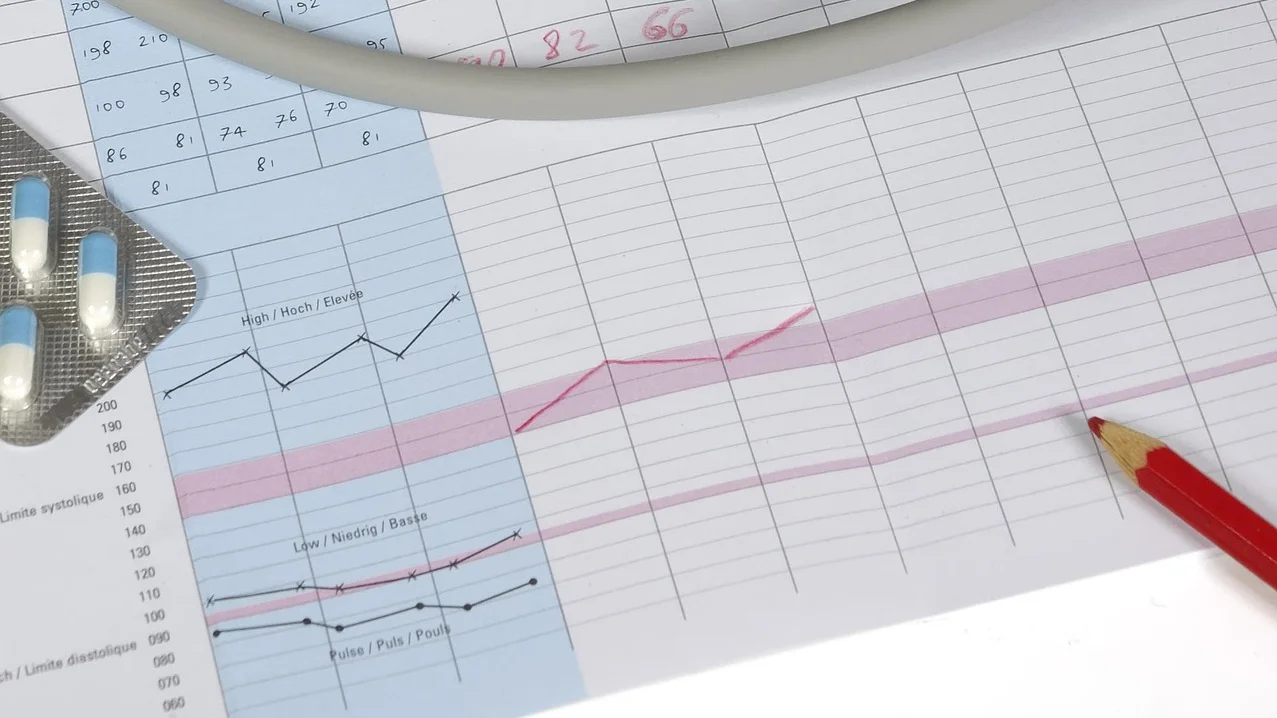
Bioavailability: How Form and Administration Method Influence Drug Effectiveness
Two tablets of the same drug, with identical nominal doses, can deliver significantly different amounts of active substance into the bloodstream. The same molecule, when administered orally versus intravenously, can have effects that vary by several times in intensity. The concept that explains these differences is bioavailability.
Bioavailability describes what portion of the administered dose reaches systemic circulation in its unchanged form and how quickly this occurs. It depends not only on the properties of the molecule itself but also on the drug's formulation, the route of administration, the physiology of the gastrointestinal tract, and the liver, which metabolizes part of the dose before it reaches the target tissues. This is why the dose listed on the packaging and the amount of the drug that actually takes effect are often two different quantities.
What Does It Actually Mean for a Drug to Be "Available"?
Bioavailability is typically denoted by the symbol F and expressed as a fraction or percentage. The reference point is intravenous administration (intravenous, IV), where the entire dose, by definition, enters the bloodstream, giving it 100% bioavailability. Every other route of administration is compared against this standard.
There are two types of this metric. Absolute bioavailability compares a specific route of administration, most commonly oral, to intravenous administration of the same substance. Relative bioavailability compares two formulations administered via the same route, for example, a new tablet versus a reference product. This second concept forms the basis for evaluating generic drugs, which we’ll revisit later on.
Interactions with Food and Other Factors Affecting Bioavailability
Food is another crucial factor influencing the bioavailability of drugs and supplements. For instance, fats can enhance the absorption of fat-soluble substances like vitamin D or certain antifungal medications. On the other hand, calcium-rich products, such as milk, can bind with antibiotics from the tetracycline group, reducing their bioavailability.
Other factors include stomach pH, gastrointestinal diseases, and the use of other medications. For example, proton pump inhibitors can decrease the absorption of drugs that require an acidic environment, such as ketoconazole. This is why doctors and pharmacists often recommend taking certain medications on an empty stomach or with specific meals to maximize their effectiveness.
How Bioavailability is Measured
Measurement is based on the concentration-time curve of the drug in the blood. The key parameter is the area under this curve (AUC), which reflects the total exposure of the body to the drug. Two other important parameters are the maximum concentration (Cmax), which indicates the peak effect strength, and the time to reach it (Tmax), which shows the absorption rate.
Absolute bioavailability is calculated as the ratio of the areas under the curve after administration via the tested route and intravenously, adjusted for doses:
F = (AUC_oral × dose_iv) / (AUC_iv × dose_oral)
The F value alone doesn't tell the whole story. A modified-release formulation may have the same AUC as an immediate-release form, yet exhibit a different action profile: lower and delayed Cmax, with a longer duration of therapeutic concentration. This is why, when evaluating a drug, both the quantity and the rate are considered together, as they jointly shape the clinical effect.
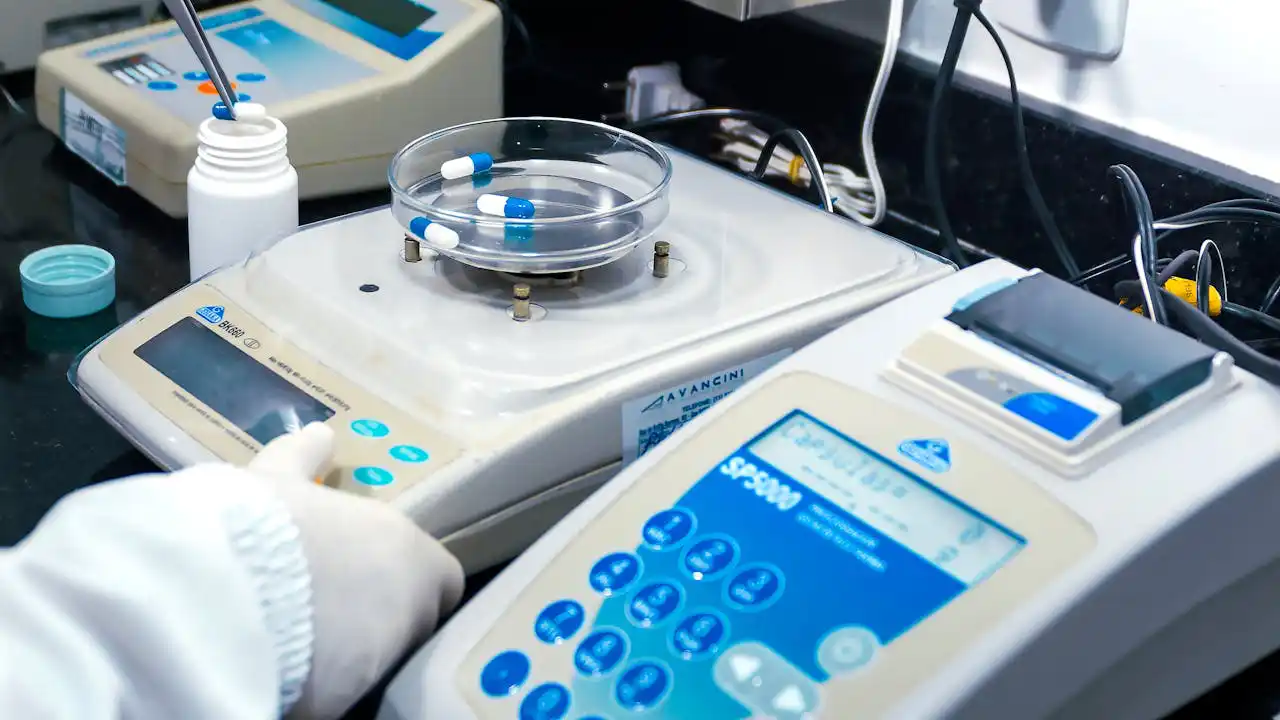
First-Pass Effect: Why Part of the Dose Disappears
A drug taken orally doesn't go directly into systemic circulation. After being absorbed in the intestinal lumen, blood from most of the gastrointestinal tract flows through the portal vein to the liver before reaching the heart and the rest of the body. At this stage, and often even earlier in the intestinal wall, some of the drug molecules undergo metabolism. This phenomenon is known as the first-pass effect.
The losses during this process are primarily caused by cytochrome P450 enzymes, particularly CYP3A4 in the intestine, and P-glycoprotein (P-gp), a transport protein that pumps some of the absorbed drug back into the intestinal lumen. In the liver, additional P450 isoenzymes and conjugation reactions, such as glucuronidation and sulfation, come into play. Altogether, these processes can consume a significant portion of the dose before the drug has any effect.
The extent of this phenomenon is described by the hepatic extraction ratio. For drugs with a high extraction ratio, metabolism depends primarily on liver blood flow, and their oral bioavailability tends to be low and variable. This group includes drugs like propranolol, morphine, levodopa, nitroglycerin, and haloperidol.
Specific figures illustrate the scale of the issue. Propranolol is almost completely absorbed from the gastrointestinal tract, but due to intense first-pass metabolism, only about 25% of the dose reaches systemic circulation on average. Morphine has an oral bioavailability of around 30%, which is why the oral dose is typically two to three times higher than the subcutaneous dose to achieve a comparable effect. Nitroglycerin is metabolized so rapidly by the liver that it would be practically ineffective in its classic oral form, which is why it is administered sublingually.
The practical consequence is significant. In individuals with liver failure, the bioavailability of drugs with high extraction ratios increases because the metabolic barrier weakens, and concentrations can reach toxic levels at standard doses. This same mechanism explains the high variability in individual responses to such drugs.
Route of Administration as the First Lever
The simplest way to alter bioavailability is to bypass the barriers that reduce it. This explains the variety of administration routes, each differing across three axes: speed, absorption completeness, and ease of use.
Parenteral routes bypass both the intestinal absorption barrier and first-pass metabolism in the liver, providing high and predictable bioavailability. Mucosal routes partially bypass the liver, while the oral route, the most convenient, is also the most variable.
- Intravenous (IV). Bioavailability of 100%, by definition the reference standard. The drug enters directly into circulation, bypassing absorption and first-pass metabolism.
- Intramuscular and subcutaneous. Typically above 80%, bypassing first-pass metabolism. Absorption rate depends on tissue perfusion and the solubility of the preparation.
- Sublingual and buccal. Often high, as blood from the oral mucosa drains without passing through the portal vein. This explains the rapid action of nitroglycerin via this route.
- Oral. Ranges from a few percent to nearly 100%, does not bypass first-pass metabolism. The most convenient but also the most variable and frequently limited by metabolism.
- Transdermal. Variable and slow, bypasses first-pass metabolism. Provides steady, prolonged release of the substance.
- Rectal. Intermediate, partially bypasses the liver, as only the lower part of the rectum drains into systemic circulation, and this varies between individuals.
- Inhalation. High local bioavailability with partial bypass of the liver. Rapid action depends on deposition in the respiratory tract.
Dosage Form: What Happens Between the Tablet and the Bloodstream
For an orally administered drug, the dosage form can be just as crucial as the active ingredient itself. Before the molecule can be absorbed, the tablet must disintegrate, and the active substance must dissolve. The dissolution stage is often the bottleneck in the entire process, especially for compounds with poor water solubility.
Several characteristics of the formulation influence how quickly and completely the drug dissolves. Particle size, or the degree of substance micronization, increases the surface area in contact with gastrointestinal fluids. The salt form alters solubility, which is why many drugs are formulated as hydrochlorides or maleates. The crystalline and amorphous forms of the same molecule can differ in solubility to such an extent that it directly impacts bioavailability.
Manufacturers can also intentionally control drug release. An enteric coating protects substances sensitive to stomach acid, delaying release until the drug reaches the intestine. Modified-release formulations spread the dose over time, reducing Cmax and prolonging the effect. This ties back to the point made in the section on measurement: immediate-release and modified-release forms may have similar AUCs but exhibit entirely different clinical profiles.
Biopharmaceutics Classification System (BCS)
An attempt to organize the factors influencing the absorption of oral drugs is the Biopharmaceutics Classification System (BCS), proposed by Amidon and colleagues in 1995. This system categorizes substances based on two characteristics: water solubility and permeability through the intestinal epithelium.
A substance is considered highly soluble if its highest dose dissolves in 250 ml of liquid within the physiological pH range, and highly permeable if at least 85% of the administered dose is absorbed. The intersection of these two criteria results in four classes:
Class I: High solubility and high permeability. Absorption is usually unimpeded, with gastric emptying rate being the only significant limitation.
Class II: Low solubility and high permeability. The bottleneck is dissolution, which is why formulation techniques such as particle size reduction or amorphous forms are most effective here.
Class III: High solubility and low permeability. The limitation lies in intestinal wall penetration, not dissolution.
Class IV: Low solubility and low permeability. Both factors are limiting, making it the most challenging class for developing an effective oral dosage form.
The classification has both theoretical and regulatory significance. For selected Class I drugs, and under certain conditions also for Class III drugs, regulatory authorities allow a so-called biowaiver, which exempts some bioequivalence studies in favor of in vitro dissolution tests. This shortens development time and reduces costs for generic drugs in cases where the risk of clinically significant differences is low.
Patient and Physiology: Variables Not Listed on the Leaflet
The same pill can behave differently in two people because bioavailability also depends on the physiology of the individual taking it. Factors like stomach and intestinal pH, gastric emptying rate, and intestinal transit time play a role, as they determine how long the drug remains in contact with the absorption surface.
Age shifts these parameters. In newborns and the elderly, the activity of metabolizing enzymes is often reduced. For drugs with high extraction rates, this increases their bioavailability and the risk of overdose at standard doses. Liver condition, as mentioned earlier, has a similar effect.
Another factor is genetics. Polymorphisms in genes encoding cytochrome P450 enzymes, particularly CYP2D6 and CYP2C19, divide the population into slow and fast metabolizers. In slow metabolizers, drugs with significant first-pass metabolism reach higher concentrations because the enzymatic barrier is less efficient. The role of gut microbiota, which can metabolize certain substances, is also increasingly well-documented, although much of this remains at the level of hypotheses and early-phase research.
Food and Interactions
The presence of food in the gastrointestinal tract is one of the most common modifiers of bioavailability. Fats enhance the absorption of lipophilic substances, food slows gastric emptying, and certain components bind drugs into poorly absorbable complexes, such as calcium or iron with some antibiotics.
The direction of the effect varies between drugs. A protein-rich meal increases the bioavailability of propranolol by about 50% without altering the time to peak concentration. On the other hand, levothyroxine is recommended to be taken on an empty stomach, as food significantly reduces its absorption. There is no universal rule; it depends on the specific molecule and the particular formulation.
A special case is grapefruit juice, which inhibits intestinal CYP3A4. For drugs metabolized by this enzyme, including certain statins like simvastatin or calcium channel blockers like felodipine, this leads to increased bioavailability and plasma concentrations, raising the risk of adverse effects. The mechanism here works differently than usual: it’s not about improved absorption but rather the removal of the metabolic barrier that would normally reduce the dose.
Bioavailability vs. Bioequivalence - The Challenge of Generic Drugs
A related but narrower concept is bioequivalence. It doesn't refer to how much of the drug reaches the bloodstream in absolute terms, but rather whether two formulations, typically a generic and a reference drug, behave similarly enough to be considered interchangeable.
The regulatory standard here is surprisingly precise. In a crossover study, the AUC and Cmax of both formulations are compared. A drug is deemed bioequivalent if the 90% confidence interval (CI) for the ratio of the geometric means of these parameters falls within the range of 80–125%. These limits are based on the regulators' assumption that differences in exposure of up to about 20% are not clinically significant.
Contrary to popular belief, this does not mean that a generic can differ from the original by as much as one-fifth. The requirement that the entire 90% confidence interval, not just the mean value, must fall within the range ensures that actual differences are usually much smaller, typically only a few percent. This distinction often leads to misunderstandings in discussions about the quality of generics.
There are exceptions to the rule. For drugs with a narrow therapeutic index (NTI), such as certain immunosuppressants, the EMA tightens the AUC criterion to a range of 90.00–111.11%. On the other hand, for substances with high intra-individual variability, the limits for Cmax may be widened using a scaled approach.
When Low Bioavailability Becomes the Goal: Prodrugs and Formulation Tricks
Bioavailability doesn’t always need to be maximized. Sometimes it’s intentionally designed, and first-pass metabolism isn’t an obstacle but a tool. A prodrug is an inactive or weakly active form that only converts into the active substance within the body. Enalapril transforms into the active enalaprilat, while valacyclovir, which is better absorbed than acyclovir, releases the active compound only after absorption.
Another approach is to block metabolism where it’s undesirable. Levodopa is broken down in the periphery before it reaches the brain, which is why it’s combined with carbidopa, a peripheral decarboxylase inhibitor. Carbidopa doesn’t cross into the central nervous system but increases the amount of levodopa that reaches the brain, allowing for a lower dose and reducing side effects.
It’s important to distinguish the above from the marketing use of the term “bioavailability” in the supplement industry, where claims of increased absorption are rarely based on data comparing the AUC of two formulations. The mere promise of a better form isn’t evidence unless accompanied by measured pharmacokinetic parameters. This is an area where the level of evidence is often significantly lower than in drug registration.
From the perspective of both patients and clinicians, bioavailability explains why the same drug in a different form or via a different route of administration works differently, why oral and intravenous doses vary, and why the timing of intake relative to meals is often specified in the leaflet for good reason. For a drug designer, it’s a variable that can be deliberately adjusted: by micronizing the substance, selecting the right salt, applying a coating, choosing the route of administration, or transforming the molecule into a prodrug. The form and method of administration aren’t just add-ons to the nominal dose. Often, they determine how much of the drug actually takes effect.
Sources
1. Amidon GL, Lennernäs H, Shah VP, Crison JR. A theoretical basis for a biopharmaceutic drug classification: the correlation of in vitro drug product dissolution and in vivo bioavailability. Pharmaceutical Research. 1995;12(3):413–420.
2. Yu LX, Amidon GL, Polli JE, et al. Biopharmaceutics Classification System: the scientific basis for biowaiver extensions. Pharmaceutical Research. 2002;19(7):921–925.
3. Brunton LL, Knollmann BC (eds.). Goodman & Gilman's The Pharmacological Basis of Therapeutics [14th edition, 2023].
4. Ritter JM, Flower RJ, Henderson G, et al. Rang & Dale's Pharmacology [9th edition, 2019].
5. FDA, CDER. Guidance for Industry: Statistical Approaches to Establishing Bioequivalence [last accessed: June 6, 2026].
6. EMA. Guideline on the Investigation of Bioequivalence (CPMP/EWP/QWP/1401/98 Rev. 1) [last accessed: June 6, 2026].
7. URPL. Summaries of Product Characteristics (SmPC) of the cited medicinal products.
8. First-Pass Effect. StatPearls, NCBI Bookshelf [last accessed: June 6, 2026].