









Caffeine, Theobromine, and L-Theanine: A Synergistic Trio for Focus
How Does Caffeine Work and Why Is It So Popular?
Caffeine is one of the most popular stimulants in the world. You'll find it in coffee, tea, energy drinks, and even some medications. Its stimulating effect comes from blocking adenosine receptors in the brain, which reduces feelings of fatigue and drowsiness.
Interestingly, caffeine starts working within 15-30 minutes after consumption, and its effects can last anywhere from 3 to 5 hours, depending on individual metabolism. However, it's not always an ideal solution. For some people, it can cause nervousness, hand tremors, or a racing heartbeat.
Caffeine has remained the most widely consumed psychoactive substance in the world for decades. The issue is that the typical dose—common in a strong coffee or a pre-workout supplement—can cause side effects for many people: tachycardia, tremors, anxiety, and a sharp energy crash after a few hours. Increasingly, functional formulas (from "smart caffeine" to nootropic drinks) are opting for lower doses of caffeine, combining it with two modulating compounds: and . This trio isn't just a random marketing concoction but is grounded in sound pharmacology.
Caffeine 100 mg: Why Not 200 mg?
Mechanism of Action
Caffeine is a non-selective antagonist of adenosine receptors, primarily the A1 and A2A subtypes. During wakefulness, adenosine accumulates in the brain and binds to these receptors, suppressing the activity of cholinergic and dopaminergic neurons—this is what creates the subjective feeling of fatigue. Due to its structural similarity to adenosine, caffeine blocks these receptors, effectively "releasing the brakes" on the dopaminergic, noradrenergic, and cholinergic systems.
On a behavioral level, the effects include increased alertness, shorter reaction times, improved working memory, and reduced subjective perception of effort. Caffeine also boosts the release of norepinephrine from the locus coeruleus neurons, leading to increased heart rate, blood pressure, and sympathetic stimulation.
Pharmacokinetics: What Happens with a 100 mg Dose
Bioavailability after oral administration: ≈ 99%, with nearly complete absorption in the small intestine
Tmax (peak concentration): 30–60 minutes (faster on an empty stomach, slower with food)
Half-life (T½): 3–6 hours in healthy adults (significantly longer during pregnancy, with CYP1A2 inhibitors, and in newborns)
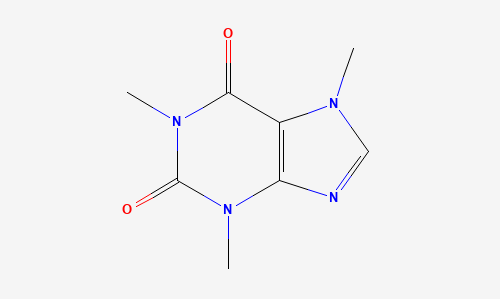
Main metabolic pathway: CYP1A2 → paraxanthine (84%), theobromine (12%), theophylline (4%)
Cmax for 100 mg ≈ 1.5–2 µg/ml—sufficient concentration to significantly block A1/A2A receptors without excessive peripheral stimulation
Why 100 mg Is a "Rational" Dose
The dose-response curve for caffeine is distinctly nonlinear. As little as 75–100 mg provides measurable improvements in alertness, reaction time, and working memory—these effects are well-documented in meta-analyses of studies on healthy volunteers. Beyond 200 mg, cognitive benefits increase disproportionately slowly, while sympathetic activation rises linearly: heart rate and blood pressure increase, along with tremors and anxiety. For sensitive individuals (slow CYP1A2 metabolizers, women on oral contraceptives, or those with anxiety disorders), the threshold for subjective discomfort may occur even earlier.
From a pharmacological perspective, a 100 mg dose hits the lower range of the therapeutic window—high enough to block a significant fraction of A1/A2A receptors in the CNS, but low enough to keep peripheral sympathetic effects moderate.
Theobromine, a Milder Cousin of Caffeine
Origin and Key Differences
Theobromine (3,7-dimethylxanthine) is the predominant methylxanthine found in cocoa and chocolate. A 100 g serving of dark chocolate contains approximately 450–600 mg of theobromine. Structurally, it differs from caffeine by lacking one methyl group (caffeine is 1,3,7-trimethylxanthine). This seemingly small difference significantly alters its pharmacological profile.
Mechanism of Action
Adenosine receptor antagonism (A1 and A2A) - similar to caffeine, but with about 5–10 times weaker affinity. This results in milder central nervous system stimulation without a sudden spike in norepinephrine levels.
Phosphodiesterase (PDE) inhibition - increases intracellular cAMP levels, which explains its vasodilatory effects, smooth muscle relaxation in the bronchi, and mild diuretic action.
Impact on the cardiovascular system - unlike caffeine, theobromine lowers blood pressure (the vasodilation of peripheral blood vessels outweighs the mild increase in cardiac output).
Pharmacokinetics
The half-life of theobromine in humans is approximately 7–8 hours, which is longer than that of caffeine. It is primarily metabolized in the liver, involving CYP1A2 (the same enzyme responsible for caffeine metabolism, which is clinically relevant for interactions). Interestingly, theobromine is one of the many metabolites of caffeine, meaning that by drinking coffee, you are exposed to small amounts of it anyway.
The typical dose used in functional formulations ranges from 50–200 mg. Its stimulating effect is subtle, with most users describing it as "calm, clean, and more prolonged" compared to the effect of caffeine alone.
What Theobromine Brings to the Duo with Caffeine
The most clinically significant observation: theobromine slightly dilates blood vessels and lowers blood pressure, partially counteracting the vasoconstriction caused by caffeine. A study published in the "European Journal of Preventive Cardiology" (2013) demonstrated that theobromine can reduce systolic blood pressure by a few mmHg within 1–2 hours of administration. On the other hand, theobromine's longer half-life extends the subjective feeling of stimulation after caffeine, easing the characteristic crash that occurs 3–4 hours later.
While less intense than caffeine, theobromine plays a crucial role in enhancing cognitive function. Its vasodilatory effects can improve blood flow to the brain, supporting focus and memory.
Thanks to these properties, theobromine is often included in supplements aimed at boosting mental performance, especially when combined with caffeine and L-theanine.
L-theanine: The Key to a Calm Mind and a Molecular Anxiety Buffer
Origin and Structure
L-theanine (γ-glutamylethylamide) is a non-protein amino acid found almost exclusively in tea leaves and certain mushrooms (Boletus badius). A standard cup of green tea contains 25–50 mg of L-theanine. Structurally, it resembles glutamate and GABA, and this similarity underpins its effects.
Mechanism of Action
Glutamatergic receptor modulation — L-theanine acts as a weak antagonist of NMDA receptors and partially inhibits the glutamatergic transporter. This reduces excessive excitotoxic stimulation (which caffeine can slightly amplify by increasing glutamate release).
Increased levels of GABA, dopamine, and serotonin — demonstrated in microdialysis studies on animal models. Translationally, this explains its anxiolytic and mildly pro-cognitive effects in humans.
Induction of alpha waves in EEG — A dose of 100–200 mg of L-theanine enhances alpha rhythm power (8–13 Hz) in the parieto-occipital regions during a resting state with eyes open. This state corresponds to "calm, relaxed alertness" — akin to the early stages of meditation.
Easy passage through the blood-brain barrier — peak concentrations in the CNS occur 30–50 minutes after oral ingestion.
What L-Theanine Brings to the Duo with Caffeine
The combination of caffeine and L-theanine is the most thoroughly studied pharmacological pairing in cognitive nutraceuticals. Numerous placebo-controlled studies (e.g., Owen et al. 2008, Haskell et al. 2008, Giesbrecht et al. 2010) consistently show that this duo enhances selective attention, reaction time, and task-switching to a greater degree than either component alone. Just as importantly, L-theanine mitigates the subjective feelings of nervousness and increases in blood pressure caused by caffeine while preserving its cognitive-enhancing effects.
The optimal ratio is 1:2 (caffeine to L-theanine), meaning approximately 200 mg of L-theanine for every 100 mg of caffeine. Some formulations also use a 1:1 ratio (100 mg + 100 mg), particularly when aiming for a more "energizing" and less sedative profile.
Three Substances, One Vector, Stimulation Without the Cost
Caffeine, theobromine, and L-theanine come from plants that often grow side by side in nature or end up together in the same cup. Caffeine and theobromine are methylxanthines, structurally related purine alkaloids found in cocoa beans, tea, and coffee. L-theanine is a non-protein amino acid unique to the leaves of Camellia sinensis (green tea). Evolutionarily, these molecules have coexisted in plants for millions of years, and interestingly, our neurobiology handles their simultaneous presence quite well.
The purpose of this combination is practical: to maintain alertness and cognitive performance driven by adenosine receptor blockade, while smoothing out the most bothersome side effects—elevated heart rate, blood pressure, anxiety, and the crash after a few hours.
The Action Curve Over Time
Composed of three pharmacokinetics, the stimulation curve after taking this trio looks different from caffeine alone. Caffeine provides a quick, two-hour peak in alertness. L-theanine, which acts within the same time window, smooths out the subjective "sharp edges," anxiety, and heart palpitations. Theobromine, with its longer T½, extends the cognitive effect plateau by another 2–3 hours and mitigates the typical caffeine crash. Subjectively, the effect is described as "focus without tension," lasting 4–5 hours.
Does the synergistic trio have any side effects?
While caffeine, theobromine, and L-theanine are considered safe in moderate doses, excessive consumption of any of these ingredients can lead to negative effects. For instance, too much caffeine may cause insomnia, tachycardia, and irritability.
Theobromine, when consumed in excess, can trigger headaches and nausea, and L-theanine, though generally well-tolerated, may occasionally lead to drowsiness. Therefore, it's crucial to use these substances as recommended, especially in supplement form.
Dosage: Practical Insights and Literature Review
Typical Daily Stack Formula
Caffeine: 100 mg (up to 200 mg/day for habitual users)
L-theanine: 200 mg (1:2 ratio to caffeine, the most well-studied)
Theobromine: 100–150 mg
Typically, the stack is taken in the morning or early afternoon. Due to the combined half-life (caffeine + theobromine), consumption after 2:00 PM can significantly disrupt sleep architecture. Even individuals who "normally don't feel caffeine in the evening" may experience reduced deep sleep as shown by actigraphy measurements, despite not subjectively struggling to fall asleep.
Tolerance and Tachyphylaxis
A2A receptors undergo up-regulation after just a few days of regular caffeine use, which explains why the subjective effects diminish after a week of daily doses. L-theanine and theobromine do not exhibit significant tolerance through this mechanism. To maintain full responsiveness, it is reasonable to use a cyclic approach (e.g., 5 days on / 2 days off) or periodic "wash-out" periods lasting 1–2 weeks every few months.
Safety, Interactions, and Contraindications
Pharmacological Interactions
Oral hormonal contraceptives and estrogens strongly inhibit CYP1A2, doubling the half-life (T½) of caffeine and theobromine. A 100 mg dose of caffeine in a woman using oral contraceptives may pharmacokinetically correspond to a dose of 180–200 mg in someone without this interaction.
Fluvoxamine, ciprofloxacin - strong CYP1A2 inhibitors; they can significantly increase caffeine levels.
Smoking tobacco is a CYP1A2 inducer; smokers metabolize caffeine significantly faster (T½ reduced by up to 50%).
Lithium - abrupt cessation of caffeine can increase serum lithium levels.
Antiarrhythmic drugs, β-blockers - caffeine may reduce their antihypertensive effectiveness.
When to Avoid This Combination
- Uncontrolled hypertension or cardiac arrhythmias (especially supraventricular tachyarrhythmias)
- Active peptic ulcer disease or gastroesophageal reflux disease during exacerbation
- Untreated anxiety disorders or bipolar disorder in manic/hypomanic phases
- Pregnancy and breastfeeding, as caffeine crosses the placenta and enters breast milk; T½ increases up to 15 hours in the third trimester
- Narrow-angle glaucoma (caffeine may elevate intraocular pressure)
- Age < 18 years, as the safety profile of stimulant combinations is not established
Who Benefits from This
The combination of 100 mg caffeine, theobromine, and L-theanine is particularly effective for individuals who:
- Do not tolerate standard doses of 200 mg+ caffeine well (palpitations, anxiety, hand tremors)
- Work in roles requiring prolonged but calm focus (programming, writing, analytics, studying)
- Are looking for a coffee alternative with more predictable effects and a lower risk of crashes
- Use oral contraceptives or CYP1A2-inhibiting medications, for whom 200 mg of caffeine is pharmacokinetically excessive
- Want to enhance alertness without amplifying the sympathetic response (less typical coffee-induced jitteriness)
The caffeine–theobromine–L-theanine trio is one of the better pharmacologically justified combinations in the cognitive nutraceuticals segment. A 100 mg dose of caffeine provides noticeable CNS stimulation with limited peripheral effects. Theobromine extends and smooths the action curve while counteracting caffeine-induced vasoconstriction. L-theanine reduces subjective tension, induces alpha waves, and enhances selective attention.
When taken in proportions of approximately 1:2 (caffeine:L-theanine) with an additional 100–150 mg of theobromine, the result is a subjectively “cleaner” stimulation profile compared to coffee alone: sustained focus for 4–5 hours, less jitteriness, and a gentler comedown. Of course, this assumes the user accounts for CYP1A2 interactions, considers the timing of intake, and avoids using the stack daily without breaks.